
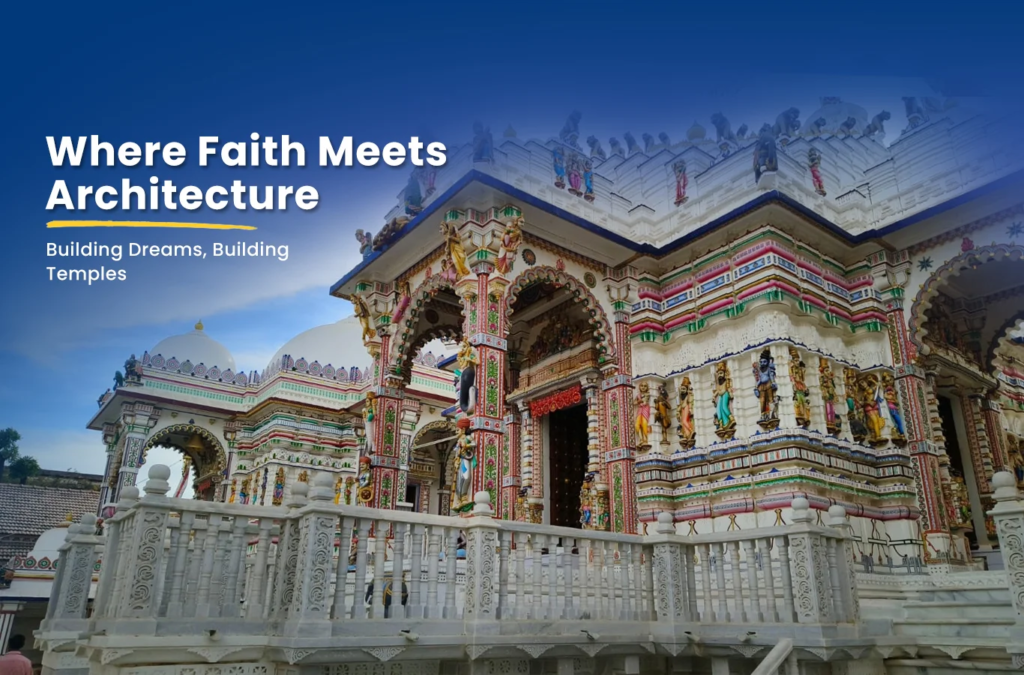
Indian temples are not merely places of worship; they are profound symbols of spirituality, culture, and architectural brilliance. Designed with meticulous attention to detail, traditional Indian temples reflect the principles of sacred geometry and cosmic harmony. Temple architects in India have historically played a pivotal role in ensuring that every element of the structure carries deep spiritual and cultural significance. Regions like Rajasthan, renowned for their intricate craftsmanship, have been at the forefront of temple construction services, creating masterpieces that continue to inspire awe.
The Essence of Traditional Indian Temple Architecture
Traditional Indian temple architecture is rooted in ancient texts like the Shilpa Shastra and Vastu Shastra, which provide guidelines for designing temples. These guidelines emphasize the alignment of the temple with celestial bodies and the incorporation of symbolic elements to create a divine connection.
Key Elements of Traditional Indian Temple Design
1. Garbhagriha (Sanctum Sanctorum)
The garbhagriha, or sanctum sanctorum, is the innermost chamber of the temple, housing the primary deity. It is considered the spiritual heart of the temple, where the divine energy is concentrated.
Symbolism:
- Represents the womb of creation, signifying life and regeneration.
- The dim lighting in the garbhagriha enhances the mystic connection between the devotee and the deity.
2. Shikhara and Vimana (Towering Superstructure)
The shikhara in northern Indian temples and the vimana in southern Indian temples are towering structures that rise above the sanctum. These elements dominate the temple skyline.
Symbolism:
- Represents Mount Meru, the mythical axis of the universe.
- Signifies the ascent of the soul toward the divine.
Example:
The temples of Rajasthan, such as the Dilwara Temples, showcase intricately carved shikharas, reflecting the expertise of temple construction services in the region.
3. Mandapa (Assembly Hall)
The mandapa is a pillared hall that serves as a space for congregational activities, rituals, and cultural performances.
Symbolism:
- Represents the physical world where devotees gather before entering the spiritual realm.
- The intricately carved pillars often depict mythological stories and celestial beings.
4. Gopuram (Gateway Tower)
Predominantly seen in Dravidian temples, the gopuram is an elaborately decorated gateway tower that marks the temple entrance.
Symbolism:
- Acts as a threshold between the mundane and the sacred.
- The towering structure draws attention to the spiritual significance of the temple.
5. Jagati (Raised Platform)
Many temples are built on a raised platform called the jagati. This platform not only provides structural stability but also adds to the temple’s grandeur.
Symbolism:
- Represents the elevation of the soul above earthly concerns.
- The ascent to the temple symbolizes the spiritual journey of the devotee.
6. Pradakshina Patha (Circumambulatory Path)
The pradakshina patha is a pathway around the sanctum, used by devotees for circumambulation.
Symbolism:
- Represents the cyclical nature of life and the universe.
- Encourages introspection and meditation during the act of circumambulation.
7. Decorative Sculptures and Carvings
Indian temples are adorned with intricate sculptures and carvings that depict deities, celestial beings, animals, and mythological tales.
Symbolism:
- These carvings convey moral lessons and spiritual teachings.
- They also serve as a visual representation of the cosmos and divine energy.
Example:
The Jain temples in Rajasthan, particularly those in Mount Abu, are renowned for their exquisite marble carvings, showcasing the skill of temple construction services in Rajasthan.
8. Kalash (Sacred Pot)
The kalash is a pot-like structure placed at the apex of the temple’s shikhara or vimana.
Symbolism:
- Represents abundance, prosperity, and divinity.
- Acts as a symbolic link between the heavens and the earth.
9. Water Features
Many temples incorporate water features like tanks, kunds (stepwells), or fountains. These water bodies are integral to temple complexes.
Symbolism:
- Represents purity and the flow of life.
- Serves as a cleansing ritual for devotees before entering the temple.
Example:
The Surya Kund at the Sun Temple in Modhera highlights the importance of water features in temple design.
10. Chhatris (Cenotaphs)
In Rajasthan, many temples feature chhatris, or dome-shaped pavilions, which enhance the aesthetic appeal of the structure.
Symbolism:
- Represents protection and divine oversight.
- Adds a unique regional identity to temple architecture.
The Role of Temple Architects in India
Temple architects in India have always adhered to the principles of Shilpa Shastra, ensuring that every structure is a harmonious blend of art, science, and spirituality. They combine traditional knowledge with innovative techniques to create temples that stand as timeless monuments of devotion and craftsmanship.
Temple Construction Services in Rajasthan
Rajasthan, known for its vibrant heritage, has been a hub for temple construction services. The state’s skilled artisans and craftsmen have contributed to some of the most iconic temples in India. From the use of locally sourced marble and sandstone to the intricate detailing in carvings, Rajasthan’s temple construction services reflect a deep commitment to preserving tradition.
Notable Contributions:
- The Dilwara Temples in Mount Abu, renowned for their intricate marble work.
- The Eklingji Temple near Udaipur, showcasing the grandeur of Rajput architecture.
Conclusion
Traditional Indian temple design is a celebration of spirituality, art, and symbolism. Each element, from the garbhagriha to the shikhara, carries profound meaning, creating a sacred space that bridges the earthly and the divine. temple architect in India and temple construction services in Rajasthan have played a crucial role in preserving this rich heritage. Their work ensures that these temples continue to inspire devotion and admiration for generations to come.