
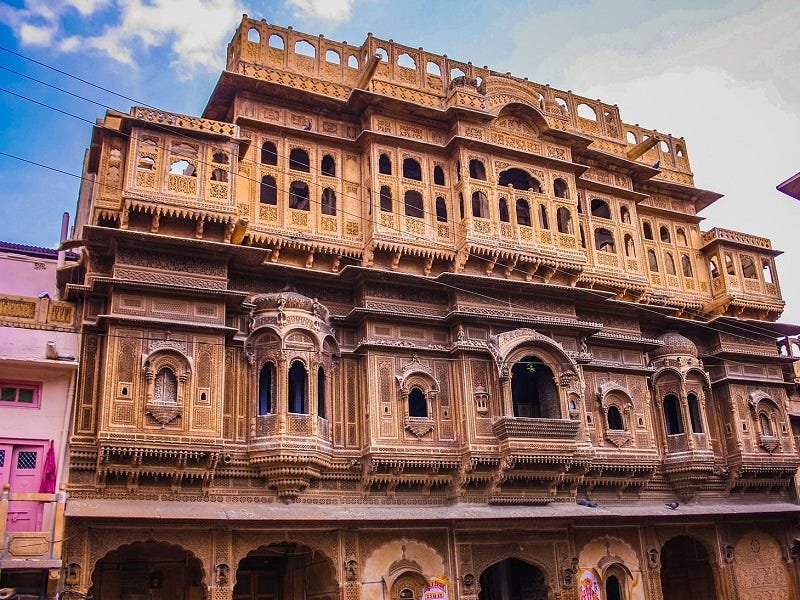
Nestled in the heart of the golden city, Jaisalmer, Nathmal Ki Haveli stands as one of the finest examples of Rajasthan’s regal past. This architectural marvel, built in the late 19th century, combines traditional Rajasthani design elements with hints of Islamic and European influences. Unlike other havelis in the region, Nathmal Ki Haveli has a unique construction story that adds to its charm, making it a must-visit site for history buffs and architecture enthusiasts alike.
A Historical Overview of Nathmal Ki Haveli
Commissioned by Maharawal Berisal, the ruler of Jaisalmer during the late 1800s, Nathmal Ki Haveli was initially designed to serve as the residence of the Prime Minister, Diwan Mohata Nathmal. The haveli showcases the artistic prowess of two brothers, Hathi and Lulu, who were skilled architects and craftsmen from the region. Interestingly, they each worked on one side of the haveli independently, leading to a design that is beautifully symmetrical yet subtly different. This asymmetrical balance, though unique, adds to the distinctiveness of the structure.
The haveli’s exterior is adorned with intricate carvings and lifelike sculptures, while its interior boasts luxurious decorations, murals, and mirror work. Over the years, Nathmal Ki Haveli has gained fame not only as an architectural wonder but also as a testament to the skilled craftsmanship that Jaisalmer is renowned for.
Architectural Details: A Masterpiece in Stone
Nathmal Ki Haveli’s façade is its most striking feature, where every inch is a showcase of detailed craftsmanship. The ornate carvings on the exterior reflect the rich artistic heritage of Jaisalmer. Floral patterns, elephants, soldiers, and depictions of everyday life have been carved into the yellow sandstone, each telling a different story. Unlike many other havelis that follow more conventional designs, Nathmal Ki Haveli has depictions of bicycles, fans, and even British soldiers, which were added after European influence reached the region.
As you step inside, the haveli greets you with stunningly detailed murals that cover the walls and ceilings. The interior boasts a blend of Rajasthani and Islamic design, particularly in the use of arches, jharokhas (overhanging enclosed balconies), and intricately designed corridors. Some parts of the haveli have mirrors embedded in the walls, which create a mesmerizing reflection of light, further enhancing the beauty of the space.
Nathmal Ki Haveli’s Unique Twin Construction
One of the most intriguing aspects of Nathmal Ki Haveli is its method of construction. As mentioned earlier, the two architect brothers, Hathi and Lulu, worked on opposite sides of the haveli. Without communicating with each other, they crafted the two halves independently, resulting in subtle differences in the patterns and carvings on either side. Yet, despite this, the overall design remains cohesive and visually harmonious. This distinct architectural feature adds a layer of mystique to the haveli, drawing visitors who are curious to spot the minute differences between the two sides.
This twin construction also mirrors Jaisalmer’s broader cultural identity, where the fusion of tradition and foreign influence shaped the city’s character. It’s a place where the past and present meet in the most beautiful ways—an idea perfectly captured by Nathmal Ki Haveli’s design.
A Living Piece of Jaisalmer’s Heritage
Nathmal Ki Haveli isn’t just an architectural marvel; it is also a living monument. The descendants of the original Prime Minister still reside in the haveli, keeping the legacy alive. Although parts of the haveli are private, sections are open to visitors, allowing them to experience firsthand the grandeur of life in 19th-century Jaisalmer.
Visitors to Nathmal Ki Haveli are often left in awe of the craftsmanship that went into its construction, but they also come away with a deeper appreciation for the cultural significance of the site. The haveli tells the story of Jaisalmer’s transformation from a desert outpost into a thriving center of trade and culture. It is also a reminder of the important role artisans played in shaping the identity of the city.
How to Explore Nathmal Ki Haveli and Jaisalmer
To truly appreciate Nathmal Ki Haveli, it’s best to explore it with a knowledgeable guide who can point out the many details that are easy to overlook. The haveli is located in the heart of the city, making it easily accessible whether you’re traveling by foot, car, or opting for a Taxi Service in Jaisalmer. The golden hues of the sandstone glow even brighter under the desert sun, making it an ideal spot for photography.
After visiting Nathmal Ki Haveli, there are several other landmarks within close proximity that are worth exploring. Jaisalmer Fort, one of the largest fully preserved fortified cities in the world, is only a short distance away. The fort itself is a UNESCO World Heritage site and is another excellent example of the city’s architectural prowess.
For those looking to experience more of the region’s spiritual side, a day trip to Tanot Mata Temple is highly recommended. Easily accessible by Jaisalmer to Tanot Mata Taxi, the temple is located near the India-Pakistan border and is steeped in local legends and historical significance.
Tips for Visiting Nathmal Ki Haveli
To make the most of your visit to Nathmal Ki Haveli, here are a few useful tips:
- Best Time to Visit: Jaisalmer’s climate can be harsh, especially during the summer months. It is best to visit between October and March when the weather is more pleasant, making it easier to explore outdoor sites.
- Guided Tours: While some travelers prefer self-guided exploration, opting for a guided tour of Nathmal Ki Haveli can offer a deeper insight into the historical and cultural aspects of the haveli.
- Photography: The haveli’s intricate carvings and stunning architecture are perfect for photography. Be sure to capture the detailed facades and the ornate interiors, particularly the mirrored corridors that reflect light beautifully.
- Nearby Attractions: Combine your visit to Nathmal Ki Haveli with other attractions like Patwon Ki Haveli, Gadisar Lake, and Jaisalmer Fort to get a full picture of the city’s rich heritage.
Conclusion
Nathmal Ki Haveli is a shining example of Jaisalmer’s rich history and architectural splendor. Its unique blend of Rajasthani, Islamic, and European design elements make it a one-of-a-kind structure, not only in Jaisalmer but across Rajasthan. Whether you’re an architecture enthusiast, a history buff, or someone who appreciates fine craftsmanship, Nathmal Ki Haveli is a must-visit destination. It stands as a proud symbol of Jaisalmer’s golden past and continues to be a source of inspiration for visitors from all over the world.
Make sure to plan a visit to this architectural masterpiece and experience the legacy of Rajasthan’s craftsmanship in all its glory.